


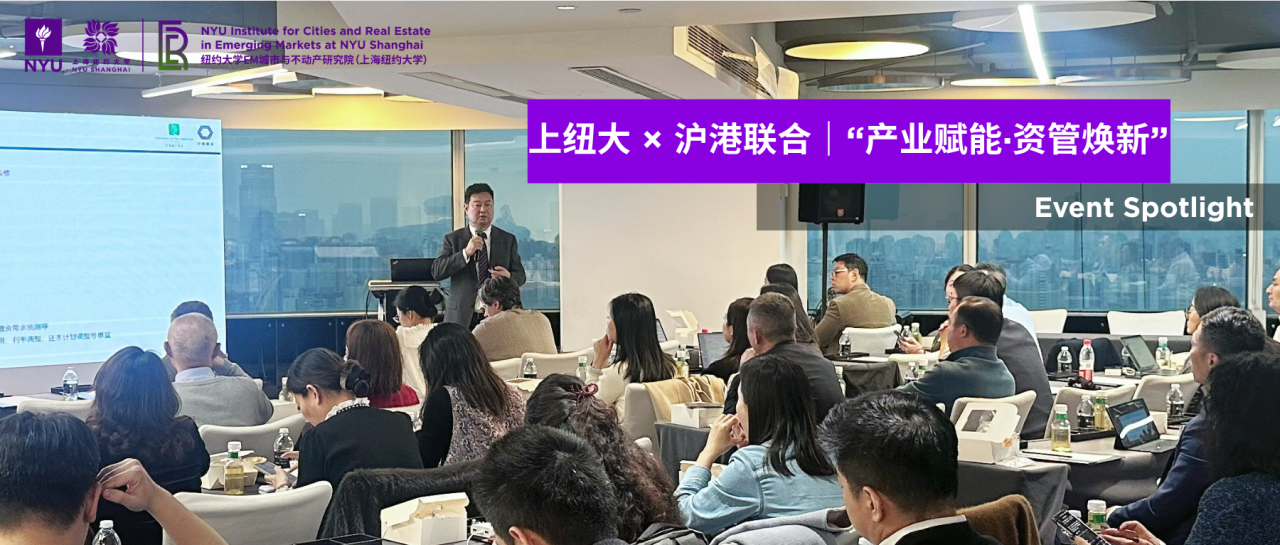
On the afternoon of March 26, the "Industry Empowerment & Asset Management Innovation" sharing session, co-hosted by NYU Shanghai and the Shanghai-Hong Kong Joint Initiative, was successfully held at the multifunctional hall on the 41st floor of Zhongganghui·Huangpu. The event focused on cutting-edge topics such as industrial selection, asset management, and the coordinated evolution of spatial carriers against the backdrop of increasing global economic and urban development uncertainties. It aimed to explore the construction path of "industry anchors" in urban renewal and their key role in reshaping asset value.
Hosted by Gu Bo, Strategic Cooperation Director of the NYU EM Institute of City and Real Estate Economics and Management (ICREEM), the session brought together experts and practitioners from academia and industry, including:
- Prof. Aleksandar Stojnovic, Dean of ICREEM at NYU Shanghai
- Wang Qiyang, Deputy Party Secretary and Director of the Dapuqiao Subdistrict Office
- Zhang Tao, Managing Director of Shanghai-Hong Kong Asset Management
- Wang Chaoyin, General Manager of Shanghai Guangci New Medical Innovation Life Health Technology Co., Ltd.
- Cao Qing, Director of the Intellectual Property and Achievement Transformation Office at Ruijin Hospital
In his opening remarks, Prof. Stojnovic emphasized that interdisciplinary and cross-regional collaboration is crucial for innovation amid global economic and urban transitions. He highlighted Shanghai’s explorations in urban renewal and industrial integration as a valuable window into the synergistic development of "industry, asset management, and space."
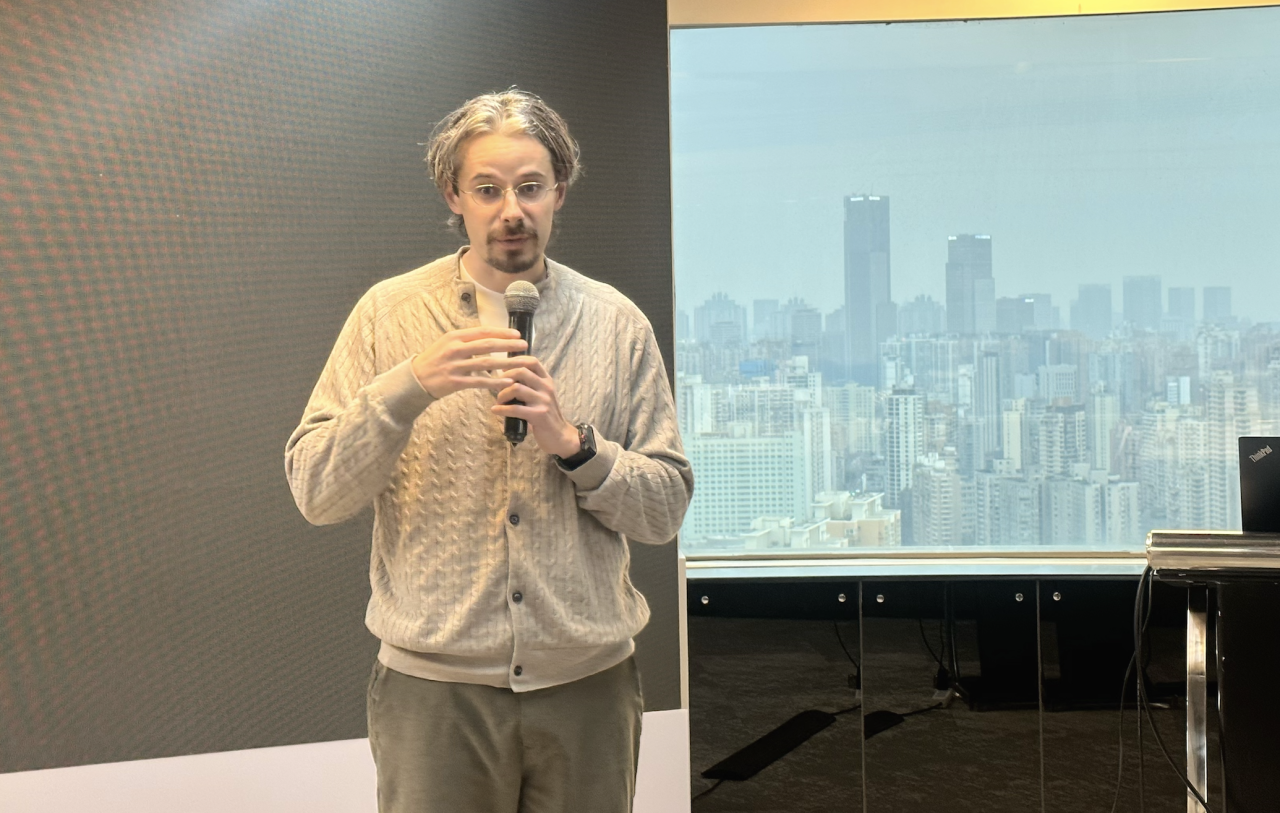
Three key speakers then delved into the critical path of "industry introduction—space restructuring—ecological operation":
- Zhang Tao shared the case of the benchmark project "Zhongganghui·Huangpu," which transformed an old hotel into a life-health industry hub leveraging its proximity to Ruijin Hospital. By 2025, the building housed over 35 medical and health enterprises, achieving an office occupancy rate exceeding 85%.
- Wang Chaoyin explained the "Guangci-Sinan" model, which creates a "vertical accelerator" for life sciences by integrating experimental platforms and professional services, reducing conversion costs. The model’s contract value exceeded RMB 100 million in 2025.
- Cao Qing discussed the "two-way transformation" mechanism between medical technology and industrial space, where clinical needs drive R&D, and diagnostic data is converted into digital assets to fuel algorithm development.
The discussion session reached a consensus: amid technological transformation, traditional real estate logic is shifting toward an "industry-driven + professional operation + ecological synergy" model. Through precise industrial positioning and systematic operation, urban spaces can evolve from static assets into carriers for cultivating new productive forces.
This sharing session provided an inspiring analytical framework and practical case studies for understanding urban development and asset value reconstruction in an uncertain environment.